Blog
Blog Posts
Blog Post #1: 24 Hour Media Diet
8:00am: My alarm went off and I quickly check my phone for texts and emails. Although it is not best to immediately check my phone, I know it is a habit I need to break at the same time.
8:45am: After making breakfast, I scroll on Instagram for a few minutes and only see friends posts rather than news posts. Instead of watching TV, I watch YouTube while eating breakfast. The creator I watch is "RemLife"- she is a lifestyle influencer who has been posting about her travels to Japan.
10:00am: After I catch up with my family, I turn on a podcast and start to get ready for work.
10:15am: As I get ready for work, I listen to a lifestyle podcast called "Pretty Basic". The hosts usually chat about their day to day life, current topics, travels, or events. The topic of this episode was deep though as the two girls were chatting about weight loss and gain along with controversies surrounding Ozempic.
11:30am: On my way to work, I listen to my "Yacht Rock" playlist. I take it as a nice reminder that music is also media.
1:00pm: At work, I was able to peek where our TV's are. They are playing the baseball opening games for the season.
4:00pm: Now I am off work and wondering if I should go on a beach walk. Along with checking the weather apps to see what the weather will look like for sunset, I also check social media.
4:30pm: I am home now. The only media I immediately catch is my mom watching HGTV then she switches to our local news channel.
6:00pm: At the gym listen to Spotify- musical media consumption.
For the rest of the duration of my day, I came home and worked on some schoolwork. I then read and went to bed at an early time as I had to get up at for work pretty early the next morning.
In this day, I didn't see too much news. The only news I encountered was local news which was covering a police pursuit in a nearby city.
This day was not very different for me compared to other days. The media I consumed was simple, not too much news media.
Blog Post #2: Evaluating Misinformation Education Tools
My first impression on News Literacy Project's Rumorguard Service was that is was very well done. The cool toned coloring allows viewers to feel calm without any added stress as some of the articles may make them feel that way instead! Additionally, it was easy to navigate as there is a search bar that allows people to see that the website is not hiding anything. The website looks factual as a whole as they consistently state that something is "determined by ____ factors" along with trending hashtags. To top it off, their addition to adding media to their home page in a fluid way is admirable as the social media tab is easily accessible. To trace back to the factuality of the website, it showcases "The 5 Factors" to viewers. Those include authenticity, source, evidence, context, and reasoning. These all provide learning opportunities, PDF's, lessons, and websites. The website also lets viewers know that in order to conquer misinformation they must "take action, learn, dig deeper, donate, and give feedback"- this teaches people how to learn and make changes in their thinking. As a whole, this tool allows people to "look at the facts" and learn steps and factors to authenticate a source. It teaches participants steps and factors to fight against misinformation. It leaves those who visit this website to want more.
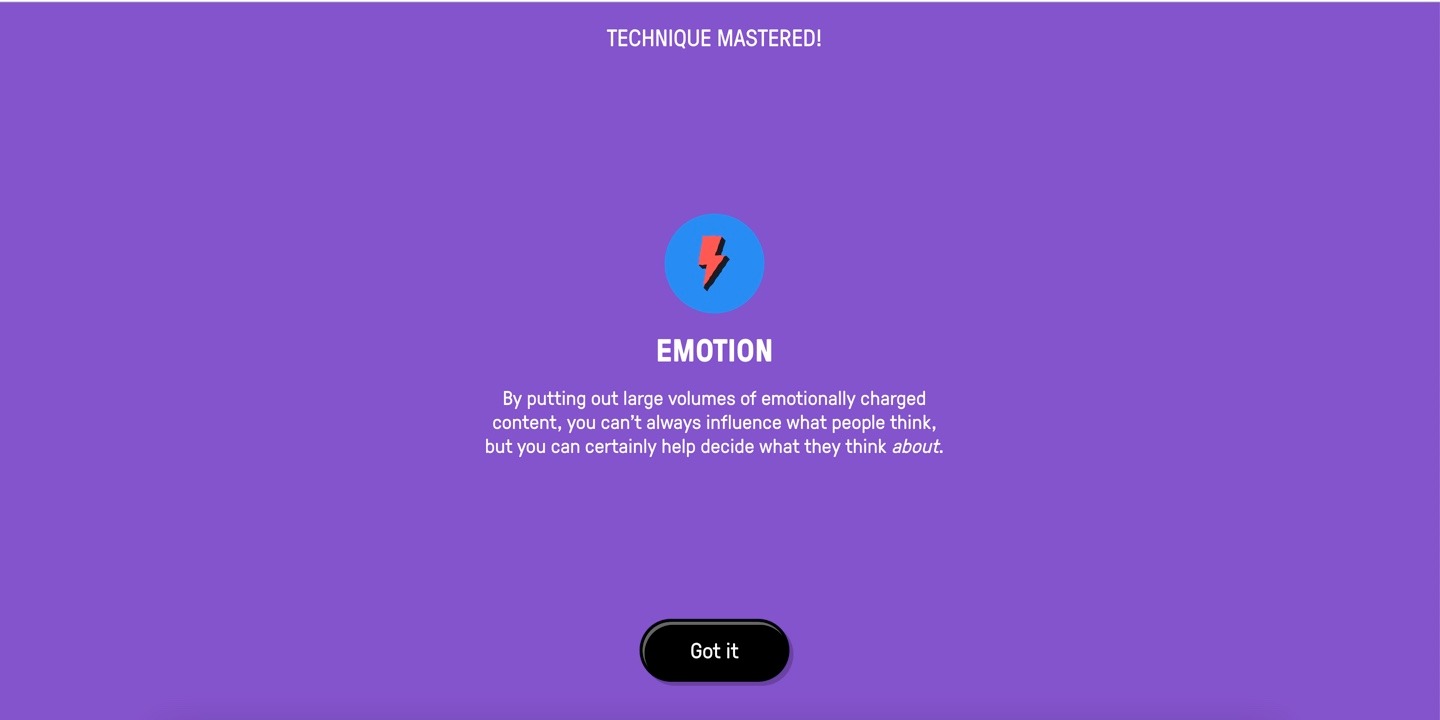
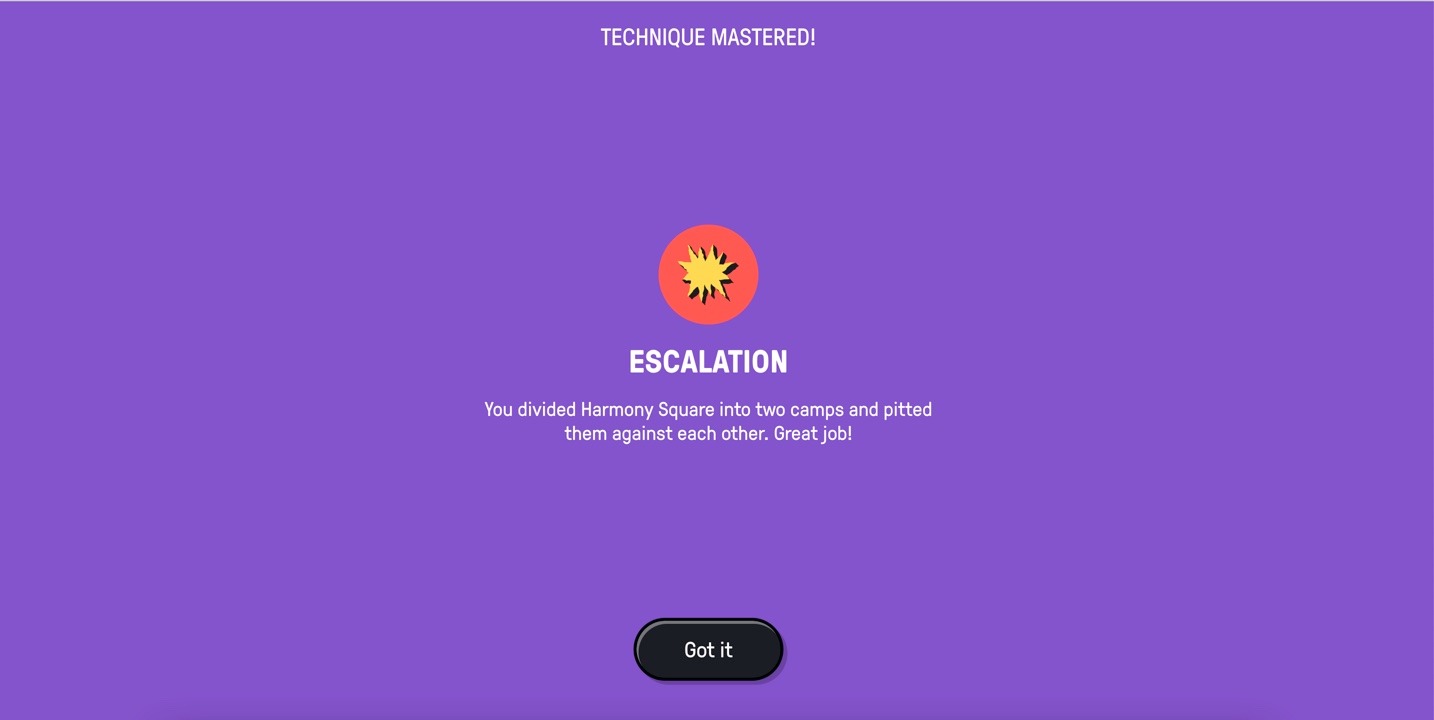
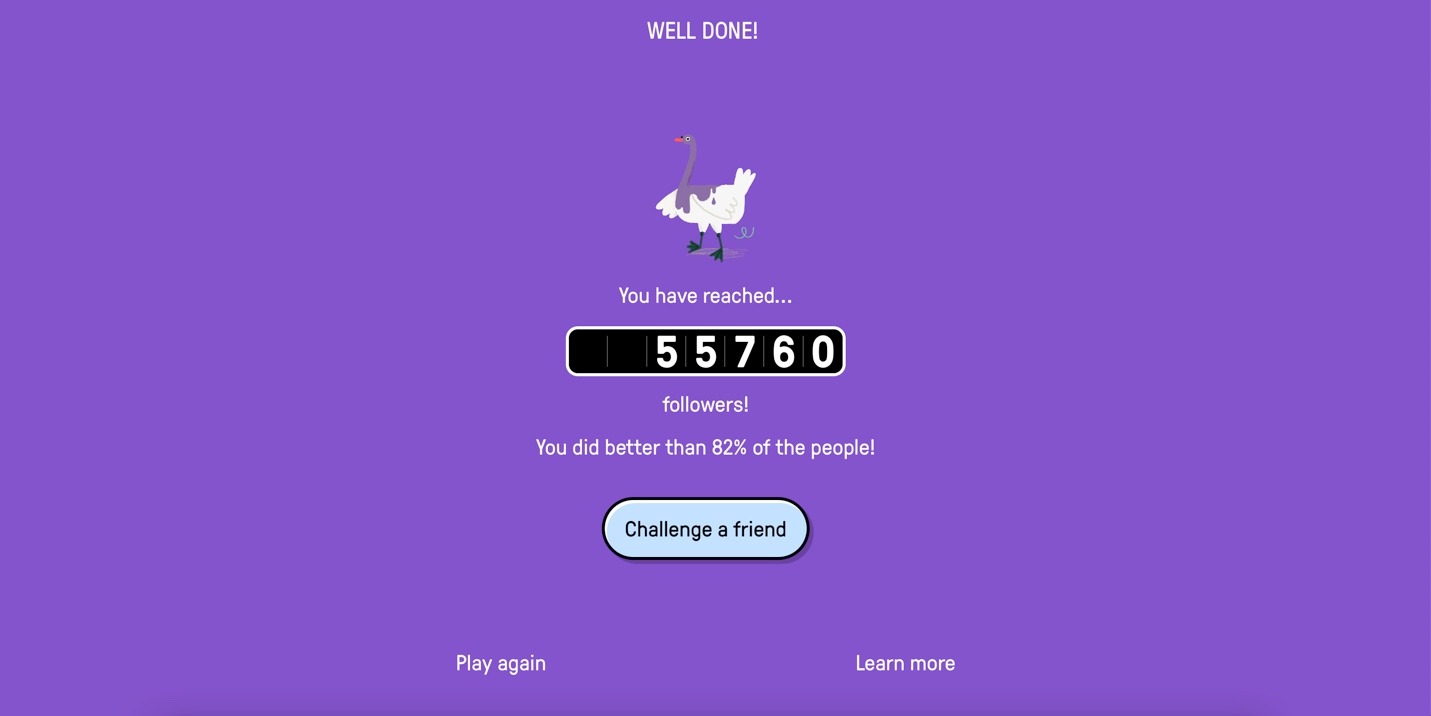
I decided to play the "Breaking Harmony Square" game... safe to say I enjoyed myself! It was appealing as it was the perfect balance of humor and education. That is the kind of work that wants people to continue to learn and play games like this. The game has you choose a character and a setup to see if you could get people to fall for your own, self- made fake news. I liked the perspective that it took as it had you almost see it in a different perspective. I was the one making the fake news and seeing how quickly people can fall for something like that. I think if more people learned about misinformation in this specific way, there would be more people that would be educated in this realm.
Below are screenshots from the test I took:
Blog Post #3: Claim Analysis
The claim that I am going to be talking about today is in speculation of America’s favorite dogs of the 20’s- Rin Tin Tin. He was very popular in silent films after his owner rescued him from the war. His adopter adopted him out of a German military dog kennel and brought the dog from rags to riches! According to the dog’s IMDb, “Rin Tin Tin was a sensation, making 26 pictures for Warners while starring in his own live 1930s radio show "The Wonder Dog". At the peak of his popularity, Warners maintained 18 trained stand-ins to reduce any stress on their dog star, while providing Rinty with a private chef who prepared daily lunches of tenderloin steak”. Easy to say that Rinty was living a good life.
After many years in the spotlight, he passed away. Some have theories on who was there when he passed away but the true conspiracy theory is on where he was buried. This is worthy of a claim because he was a famous celebrity and people were told one thing about his burial but another may have occurred.
The SIFT theory stands for Stop, Investigate the Source, Find Better Coverage, and Trace (claims, quotes, and media). It counts for red flags because it is a conspiracy theory, sort of like a fan theory, and curiosity for factual evidence.
When it comes to specifics, the S in the theory stands for this all counting as a “conspiracy theory”. People will quickly stop and question the validity. The I is utilized when it comes to investigating. When it comes to something in alignment with a celebrity figure, IMDb can help. The F is difficult as conspiracy theories are difficult to find coverage in.
Blog Post #4: Assessing Current Playforms' Attempts to Curb Mis-information
In today's digital age, not only are we constantly surrounded by media and ever-changing news cycles, we are also always absorbing social media. According to a study done by Pew Research Center, "half of U.S. adults say they use Instagram, and smaller shares use sites or apps such as TikTok, LinkedIn, X (formerly Twitter) and Snapchat". We can typically see a trend when it comes to someone using a social media site as they may be influenced to sign up for another one. They may enjoy that sit they decide to give another one a go. This give people more sites to check, more posts to like, and more comments to read. While all of this is happening though, how much of what we are digesting is correct information?
Instagram is a social media platform that gained a quick popularity back in 2010. Via Britannica. com, Instagram was launched on October 6, 2010 cofounded by Kevin Systrom and Mike Krieger, yet it is now owned by Meta. Back in 2022, there were two billion subscribers monthly that were actively using the site. This social media app allows people to post images, videos, stories, and direct message others. Additionally, user scan follow friends, celebrities, and other accounts that may fit their niche interests or hobbies.
Another media platform that is pretty popular is Reddit. Via Wikipedia, this app was founded in June 23, 2005 by Steve Huffman and Alexis Ohanian, both University of Virginia students. According to www.business.reddit.com,
"Reddit is where redditors connect over shared interests, participate in discussions, and learn about what's relevant in the world. Reddit allows businesses to engage with diverse audiences across all target demographics". It is almost like a web blog allowing space for input and discussions.
I have been an active Instagram user and it would be interesting to find out more on policies, this being my reasoning for choosing Instagram as a platform to study. There is lots of talk revolving around Reddit when people bring up internet research; different point of views on one aspect leads to different "facts" but how do we know what is right.
Instagram has their own page when it comes to combating false information. This allows people to have quick access to this information. In their Help Center there is a title reading "Reducing the Spread of False Information on Instagram". There are multiple tabs talking about how to fact check posts that read the following...
- "Making false information harder to find"
- "Using technology to find the same false information"
- "Labeling posts with false information warnings"
- "Removing content and accounts that go account Community Guidelines"
An additional fact that is interesting in this area of Instagram's guidelines is that they will restrict accounts that repeatedly post information. This is to make sure that there is no continuation in responses.
When it comes to Reddit and their rules, there are eight main rules. Rule number one stating to "remember the human". I believe that this is a good blanket statement when it comes to misinformation.